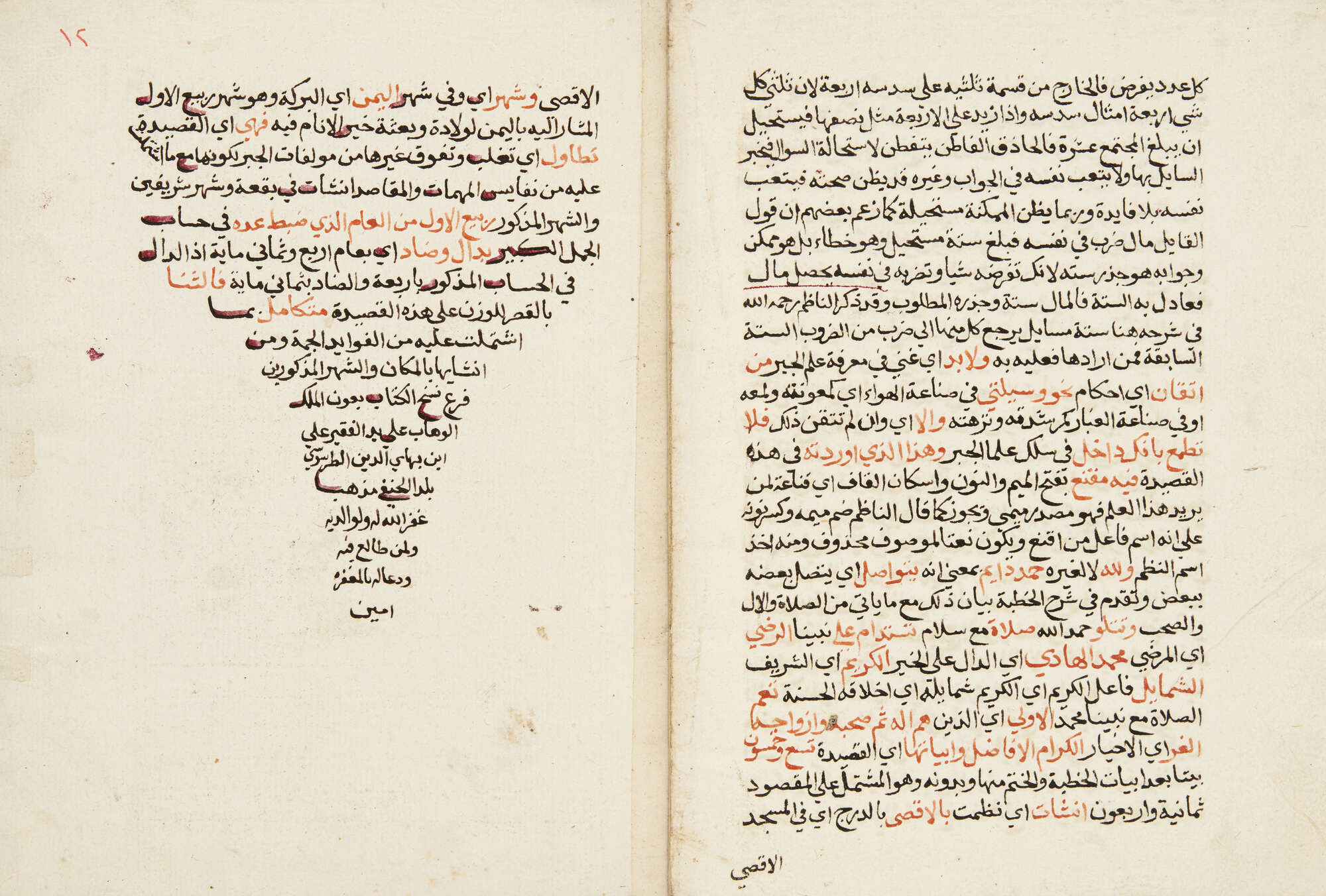
 Figure 1. Page from Sharh al-Muqni’ fi al-Jabr wa al-Muqabalah, signed Ali bin Bahay-i al-Din al-Tarsusi, Ottoman provinces, 19th century, 12ff. with 25ll. of black naskh per page, some words in red, in blue board covers, folio 21 x 16cm (Source)
***
Ibn al-Ha’im: The Illustrious Scholar of Jerusalem
Welcome to ISM Library
Assalamu Alaikum! Welcome to ISM Library, your gateway to the rich heritage of Islamic scholarship. Today, at 07:51 PM IST on Monday, August 04, 2025, we are delighted to present an in-depth exploration of Ibn al-Ha’im al-Maqdisi, a luminary of the 14th/15th century whose contributions continue to inspire. Authored by Arshad Hussain, this article aims to illuminate his life, works, and legacy, preserved in manuscripts across Near Eastern libraries. Join us on this intellectual journey and share your insights to enrich our community!
Life and Early Education
Birth and Family Background
Ibn al-Ha’im al-Maqdisi, born Shihab al-Din Ahmad ibn Muhammad ibn ‘Imad ibn ‘Ali al-Qarafi, emerged into the world in 1352 or 1354 (753 or 756 AH) in Al-Qarafah al-Sughra, a scholarly district of Cairo, Egypt. His family, deeply rooted in the pursuit of knowledge, nurtured his early intellectual growth. By childhood, he had memorized the Qur’an and numerous hadiths, laying a robust foundation in Islamic sciences. This early exposure to religious texts, combined with access to Al-Azhar’s vibrant study circles, shaped his multifaceted career.
Move to Jerusalem and Academic Pursuits
In his youth, Ibn al-Ha’im migrated to Al-Quds (Jerusalem), a city renowned as a center of Islamic learning under Mamluk rule. There, he studied under luminaries such as Siraj al-Din al-Bulqini, Al-Taqi ibn al-Hatim, Abu al-Hasan al-Jalawi al-Maliki, Al-Jamal al-Amyuti, and others. His intellect and eloquence earned him respect, leading to his appointment as principal of the prestigious Ṣalāḥiyya Madrasa. This move marked the beginning of his lifelong dedication to Jerusalem, where he resided until his death in 1412 (815 AH) at age 59 or 62, buried in the historic Ma’man Allah cemetery.
Scholarly Contributions
Mastery of Mathematics and Algebra
Ibn al-Ha’im’s mathematical prowess shone through his focus on practical applications, particularly *hisab al-fara’idh* (inheritance calculations), earning him the title Ibn al-Ha’im al-Fara’idhi. His seminal work, *Al-Muqni’ fi al-Jabr wa al-Muqabalah*, a 59-line poetic treatise on algebra, addressed solving unknowns, roots, and equations, influencing later scholars. Another key text, *Al-Luma’ fi al-Hisab*, covered multiplication, division, and fractions, attracting numerous commentaries. His innovative approaches, blending traditional methods with practical utility, set him apart in the Islamic mathematical tradition.
Extensive Body of Work
With over 43 known works, Ibn al-Ha’im’s output spanned mathematics, jurisprudence, and Qur’anic exegesis. Notable titles include *Al-Hawi fi ‘Ilm al-Hisab* (a summary of Ibn al-Banna’s work), *Risalah fi al-Ghirbal* (on prime numbers), and *Nuzhat al-Nuzzar fi Sina’at al-Ghubar* (on dust board calculations). His jurisprudential texts, such as *Nuzhah al-Nufus fi Bayan Hukum al-Ta’amul bi al-Fulus* and *Al-Tibyan fi Tafsir Gharib al-Qur’an* (a four-volume exegesis), reflect his broad intellectual scope. Many works, like *Sharh al-Kifayah fi al-Fara’idh*, remained incomplete, yet their fragments offer valuable insights.
Manuscript Preservation
His manuscripts are treasures preserved across Near Eastern libraries. The Gazi Husrev-beg Library in Sarajevo holds *Nuzhat al-nuzzar fi qalam al-gubar*, while Al-Azhar Library houses multiple copies of *Al-Wasilah* and *Al-Luma’*. The Egyptian National Library safeguards *Al-Tuhfah al-Qudsiyyah* (dated 862/1457) and *Al-Kifayah fi al-Fara’idh* (1,096 verses). These documents, often in the author’s handwriting, underscore his enduring legacy and the richness of Islamic scientific heritage.
Historical and Cultural Context
Palestine as a Scholarly Hub
During the 14th and 15th centuries, Palestine, under Mamluk governance, was a thriving intellectual center. Jerusalem’s madrasas, mosques, and libraries fostered a culture of learning, attracting scholars like Ibn al-Ha’im. His presence reflects Palestine’s role as a bridge between Egyptian and Levantine intellectual traditions, a legacy continued despite 20th-century challenges.
Influence of Mamluk Era
The Mamluk Sultanate (1250–1517) supported scientific and religious scholarship, providing Ibn al-Ha’im with resources to teach and write. His interactions with students and peers, including Ibn Hajar al-‘Asqalani, highlight a collaborative academic environment, enriched by the era’s emphasis on practical sciences like inheritance law.
Lessons from His Life
Lesson 1: Pursuit of Holistic Knowledge
Ibn al-Ha’im’s mastery of diverse fields—mathematics, jurisprudence, and exegesis—demonstrates the Islamic tradition’s encouragement of comprehensive learning. His ability to simplify complex ideas for societal benefit remains a model for modern scholars.
Lesson 2: Mentorship and Community Impact
Guiding students at Ṣalāḥiyya Madrasa and producing works that inspired commentaries, Ibn al-Ha’im exemplifies how mentorship builds intellectual communities. His legacy persists through his students’ contributions and preserved manuscripts.
Lesson 3: Perseverance Amid Challenges
Despite incomplete works and the pressures of his time, Ibn al-Ha’im’s dedication to practical scholarship teaches resilience. His focus on inheritance calculations addressed real-world needs, showcasing adaptability.
Some of his notable students include
Among Ibn al-Ha’im’s distinguished students were Ibn Hajar al-‘Asqalani, a renowned hadith scholar, Al-Sakhawi, a notable historian and biographer, Badr al-Din al-‘Ayni, a prominent jurist, and Shams al-Din al-Sakhawi, who contributed to Islamic historiography. These students carried forward his teachings, amplifying his influence across various fields of Islamic scholarship.
Legacy and Modern Relevance
Ibn al-Ha’im’s influence extends beyond his era. His algebraic methods influenced Ottoman mathematicians, while his jurisprudential works informed Islamic legal thought. Today, his manuscripts, studied by historians like Ahmad Sa‘idan, offer insights into medieval Islamic science. Palestine’s scholarly heritage, exemplified by Ibn al-Ha’im, continues to inspire research into the region’s intellectual past.
Conclusion
Ibn al-Ha’im al-Maqdisi (1352/1354–1412) was a beacon of Islamic scholarship, born in Cairo and immortalized in Jerusalem. His 43 works, ranging from *Al-Muqni’ fi al-Jabr wa al-Muqabalah* to *Al-Tibyan fi Tafsir Gharib al-Qur’an*, reflect a genius that bridged theory and practice. Buried at Ma’man Allah, his legacy endures in manuscripts from Baghdad to Tunis, inspiring modern scholars to explore Palestine’s rich intellectual tradition. Share your reflections to keep this knowledge alive! JazakAllah Khair!
Notes
This article expands on Salim Al-Hassani’s work (July 18, 2025), drawing from Mujir al-Din’s *Al-Uns al-Jalil* (1866), Khudayr al-Minshidawi’s thesis (1982), Suter (1900), Brockelmann (1943-49), and Tuqan (1954). Facts (birth 1352/1354, death 1412, Ma’man Allah burial) are verified. Explore more at: Detailed Biography of Dr. Israr Ahmad. Feedback is welcome to enhance ISM Library’s mission! JazakAllah Khair!
ISM Library Mein Swagat
Assalamu Alaikum! ISM Library mein aapka swagat hai, jahan Islamic scholarship ki rich heritage aapke liye khuli hai. Aaj, 04 August 2025, Monday ko 07:51 PM IST par, hum aapko Ibn al-Ha’im al-Maqdisi, 14vi/15vi sadi ke jane mane scholar aur mathematician, ke baare mein detail se batayenge. Yeh article Arshad Hussain ne likha hai, jo Ibn al-Ha’im ke kaam, aur viraasat ko roshan karta hai, jo Near Eastern libraries mein sanjohe gaye hain. Is intellectual journey mein humare sath chaliye aur apne khayalat share karke community ko mazboot karein!
Editor’s Note
Yeh article humari team ke liye ek special kaam hai, jo Ibn al-Ha’im ke zindagi aur kaamon ko samajhne ka mauka deta hai. Humne unke manuscripts aur unke waqt ke context ko explore kiya hai taaki aapko pura gyan mile. Agar aapko koi sujhav ya sawal ho, toh zaroor batayein—humari community ko aapke input se aur bhi mazboot banane ka irada hai. JazakAllah Khair!
Some of his notable students include
Ibn al-Ha’im ke mashhoor shagirdon mein Ibn Hajar al-‘Asqalani, ek bade hadith scholar, Al-Sakhawi, ek history aur biography ke maahir, Badr al-Din al-‘Ayni, ek prominent jurist, aur Shams al-Din al-Sakhawi, jo Islamic historiography mein kaam kiye, shamil hain. Yeh shagird unhone sikhaaya aur Islamic ilm ko aage badhaya, jo unki mentorship ki taqat ko dikhata hai.
References
Yeh article Salim Al-Hassani ke kaam (18 July 2025) se shuruat karta hai, aur Mujir al-Din ke *Al-Uns al-Jalil* (1866), Khudayr al-Minshidawi ki thesis (1982), Suter (1900), Brockelmann (1943-49), aur Tuqan (1954) se gyan liya gaya hai. In sources ne Ibn al-Ha’im ke janam (1352/1354), maut (1412), aur Ma’man Allah dafan ko verify kiya hai. Aur jano: Detailed Biography of Dr. Israr Ahmad.
Zindagi aur Shuruaati Taleem
Janam aur Parivaar ka Pehlu
Ibn al-Ha’im al-Maqdisi, jinke poora naam Shihab al-Din Ahmad ibn Muhammad ibn ‘Imad ibn ‘Ali al-Qarafi hai, ka janam 1352 ya 1354 (753 ya 756 AH) mein Cairo ke Al-Qarafah al-Sughra ilake mein hua. Unka parivaar gyan ki talash mein tha, jisse unki bachat se hi Qur’an aur hadith yaad karne ki aadat pad gayi. Al-Azhar ke study circles ne unki bahuayami career ko aage badhaya.
Jerusalem ki Aur aur Ilmi Safar
Jawani mein woh Al-Quds (Jerusalem) chale gaye, jo Mamluk raj mein ek ilm ka markaz tha. Wahan Siraj al-Din al-Bulqini, Al-Taqi ibn al-Hatim, Abu al-Hasan al-Jalawi al-Maliki, aur Al-Jamal al-Amyuti jaise scholars se padhai ki. Unki akalmandi aur bolne ki kshamata ne unhe Ṣalāḥiyya Madrasa ka principal banaya. 1412 (815 AH) mein 59 ya 62 saal ki umar mein wahan hi maut hui, aur Ma’man Allah qabristan mein dafan hue.
Ilmi Yogdan
Math aur Algebra mein Mahir
Ibn al-Ha’im ka math mein dum *hisab al-fara’idh* (virasat ka hisaab) par focus se dikhta hai, jisse unhe Ibn al-Ha’im al-Fara’idhi kaha gaya. Unka kaam *Al-Muqni’ fi al-Jabr wa al-Muqabalah*, ek 59-pankti ka algebra poem, unknowns aur equations solve karne ka rasta batata hai. *Al-Luma’ fi al-Hisab* mein multiplication, division, aur fractions hain, jiski bahut commentaries hui. Unka naye tareeke se practical use ne unhe alag banaya.
Bahut Saari Kitaabein
Unki 43 se zyada kitaabein math, fiqh, aur tafsir ko cover karti hain. *Al-Hawi fi ‘Ilm al-Hisab* (Ibn al-Banna ka summary), *Risalah fi al-Ghirbal* (prime numbers par), aur *Nuzhat al-Nuzzar fi Sina’at al-Ghubar* (dust board calculations) unke kaam hain. Fiqhi kitaabein jaise *Nuzhah al-Nufus fi Bayan Hukum al-Ta’amul bi al-Fulus* aur *Al-Tibyan fi Tafsir Gharib al-Qur’an* (char volume) unki wide range ko dikhati hain. Adhoore kaam jaise *Sharh al-Kifayah fi al-Fara’idh* bhi kaafi insightful hain.
Manuscripts ki Hifazat
Unke manuscripts Near Eastern libraries mein sanjohe gaye hain. Sarajevo ke Gazi Husrev-beg Library mein *Nuzhat al-nuzzar fi qalam al-gubar* hai, Al-Azhar mein *Al-Wasilah* aur *Al-Luma’* ke copies hain. Egyptian National Library mein *Al-Tuhfah al-Qudsiyyah* (862/1457) aur *Al-Kifayah fi al-Fara’idh* (1,096 panktiyan) hain. Yeh author ke haath ke likhe hue hain, jo Islamic heritage ki dhan ko batate hain.
Tareekhi aur Saqafati Pehlu
Palestine ka Ilmi Markaz
14vi aur 15vi sadi mein, Mamluk raj ke neeche Palestine ek thriving ilm ka markaz tha. Jerusalem ki madrasas, masjiden, aur libraries ne scholars jaise Ibn al-Ha’im ko attract kiya. Yeh Egypt aur Levant ke ilm ke bridge ka misaal hai, jo 20vi sadi ke challenges ke bawajood zinda hai.
Mamluk Era ka Asar
Mamluk Sultanate (1250–1517) ne science aur deen ke ilm ko support kiya, jisse Ibn al-Ha’im ko padhane aur likhne ke resources mile. Unke shagirdon, jaise Ibn Hajar al-‘Asqalani, ke sath interaction ne ek collaborative mahol banaya, jahan practical sciences jaise virasat ka qanoon emphasize kiya gaya.
Zindagi ke Lessons
Lesson 1: Poore Gyan ki Talash
Ibn al-Ha’im ka diverse fields—math, fiqh, tafsir—mein mahir hona Islamic tradition ki comprehensive learning ko dikhata hai. Complex ideas ko aasaan karna aaj ke scholars ke liye model hai.
Lesson 2: Shagird aur Samaaj par Asar
Ṣalāḥiyya Madrasa mein shagirdon ko guide karna aur commentaries inspire karna, Ibn al-Ha’im ne mentorship se intellectual community banayi. Unka asar shagirdon aur manuscripts mein zinda hai.
Lesson 3: Mushkilon mein Dheetta
Adhoore kaam aur waqt ki chunautiyon ke bawajood, Ibn al-Ha’im ka practical scholarship par focus resilience sikhata hai. Virasat ke hisaab ne real-world needs ko address kiya.
Viraasat aur Aaj ki Relevancy
Ibn al-Ha’im ka asar aaj bhi hai. Unke algebraic tareeke Ottoman mathematicians ko influence kiye, aur fiqhi kaam Islamic legal thought mein madad kiye. Aaj Ahmad Sa‘idan jaise historians unke manuscripts se medieval Islamic science ko samajhte hain. Palestine ka scholarly heritage, Ibn al-Ha’im se, research ke liye inspire karta hai.
Conclusion
Ibn al-Ha’im al-Maqdisi (1352/1354–1412) Islamic scholarship ka ek chamakta sitara tha, Cairo mein janme aur Jerusalem mein amar. Unki 43 kitaabein, *Al-Muqni’ fi al-Jabr wa al-Muqabalah* se lekar *Al-Tibyan fi Tafsir Gharib al-Qur’an* tak, theory aur practice ka milaap dikhati hain. Ma’man Allah mein dafan, unki viraasat Baghdad se Tunis tak manuscripts mein zinda hai, jo aaj ke scholars ko Palestine ke rich heritage ko explore karne ke liye bulati hai. Khayalat share karein! JazakAllah Khair!
Notes
Yeh article Salim Al-Hassani ke kaam (18 July 2025) par bana, Mujir al-Din ke *Al-Uns al-Jalil* (1866), Khudayr al-Minshidawi ki thesis (1982), Suter (1900), Brockelmann (1943-49), aur Tuqan (1954) se liya gaya. Facts (janam 1352/1354, maut 1412, Ma’man Allah dafan) verify kiye gaye. Aur jano: Detailed Biography of Dr. Israr Ahmad. Feedback dein ISM Library ke mission ko mazboot karne ke liye! JazakAllah Khair!
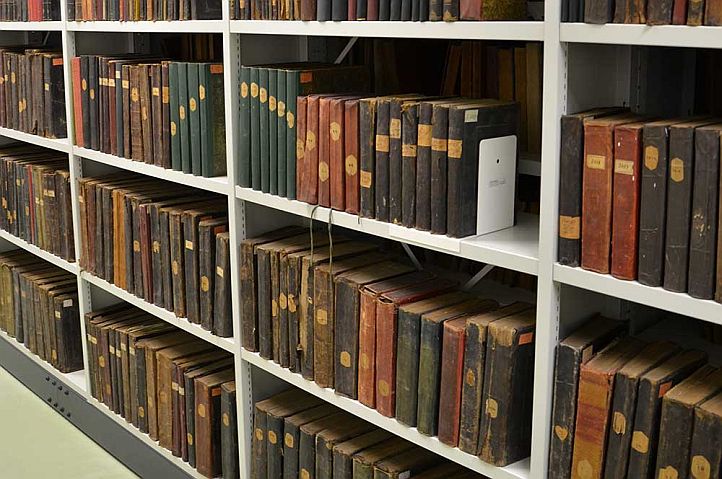 |
| Figure 2. Manuscripts in the Gazi Husrev-beg Library at Sarajevo, which is the oldest cultural institution in Bosnia-Herzegovina, and one of those manuscripts in the photo is Nuzhat al-nuzzar fi qalam al-gubar, a work on mathematics, in Arabic, written by Ibn al-Ha’im al-Maqdisi (d. 1412). (R-2440/1) (Source) |
No comments:
Post a Comment